


Big Dog Behavior: Why Ordinary Habits Need Bigger Manners
Your dog leans on your leg, and you brace like you are catching a falling bookshelf. Your dog yawns and the whole hallway hears about it. One tail wag clears the coffee table. These are the same habits every dog has. The physics are what changed.
That is the thing nobody warns you about when you bring home a giant puppy who will eventually outweigh your teenager. Nothing your dog is doing is unusual. The consequences are.
How to Read Your Dog's Whole Body Message
Your dog communicates with the entire body, and with a large breed you get the message in extra large print. The catch is that no single signal has one fixed meaning.
Veterinary guidance on how to read dog body language makes the same point: signals are read together and in context, not translated one at a time.
What Leaning, Licking, Yawning, and Sniffing Can Mean
Leaning is often contact seeking. A dog who wants closeness, reassurance, or your attention has an easy way to ask, and a hundred pound body makes the request impossible to overlook. It can also be a dog who is simply tired, or one who has learned that leaning reliably produces scratching.
Licking, yawning, and sniffing get misread more than anything else. A yawn nowhere near bedtime may signal mild stress, or it may be a yawn. Sudden sniffing at the ground during a greeting can be a way of breaking tension, and it can also be a dog who found something interesting.
Behaviors that turn up out of context like this are sometimes described as displacement behavior. The useful habit is to notice the mismatch between the behavior and the situation, then look at what else the body is doing before deciding what it means.
How Posture, Movement, and Tail Wags Change the Message
Watch the shape of the whole body rather than the tail alone. A loose, wiggly body with a low, sweeping wag tends to read as friendly. A stiff frame with a high, fast, tight wag more often reads as aroused, which is not the same thing as happy and not the same thing as aggressive either.
Movement carries information too. A big dog who freezes, shifts weight backward, or turns the head away is often asking for space. Give it, then work out why afterward.
When Barking, Growling, or Hiding Calls for More Attention
Growling is information. Do not punish it away. A dog who learns that growling gets them in trouble may skip the growl next time, and the growl was the part that gave you warning.
Barking that repeats at nothing in particular, hiding behind furniture, or backing off from things your dog used to enjoy is worth investigating rather than correcting. In a physically strong dog, the cost of pushing past a warning is higher than it is elsewhere.
Big Dog Behavior at Home: When Size Changes the Stakes
Indoors is where scale starts to bite. A behavior that is charming at twenty pounds becomes a furniture rearrangement at a hundred and twenty.
Why Big Dogs Lean, Climb, and Curl Up on Their People
Dogs lean and climb because contact feels good and because it has worked before. Both things are usually true at once.
Your Great Dane has not considered whether a lap has a weight limit. Your Newfoundland has concluded that curling up is a two person activity. The practical answer is to give the behavior a legal address: a mat, a corner of the sofa, or a dog bed roughly the size of a twin mattress.
Reward the settle. Toss a treat onto the mat before your dog arrives on you, then release for cuddles on your terms rather than mid sentence.
Doorway Blocking and Hallway Sprawling Without the Daily Traffic Jam
A Mastiff parked sideways in a doorway is usually not guarding anything. That is often just the coolest tile in the house.
Teach a cheerful "scoot" cue. Say the word, toss a treat two steps away, repeat until the word alone moves the body. It beats stepping over a rug that breathes several times an evening.
Counter Surfing, Begging, and Stealing at Big Dog Height
Counters are chest height to a giant breed. Nothing up there is stored. It is displayed.
Management does more work than training here:
- Push food to the back of the counter rather than the edge
- Give a stuffed toy during meal prep
- Reward a mat station instead of table side begging
- Use baby gates through holiday cooking marathons
Chewing, Digging, and Zoomies That Take Over the House
Chewing and digging are normal dog behaviors. They tend to become destructive when a dog has more capacity than outlet, though boredom is not the only reason either behavior appears.
Sniff walks, food puzzles built for strong jaws, and short training games all give a big dog something to do. Zoomies down a hallway end in a bruised shin often enough that opening a door and letting the laps happen outside is worth the trouble.
Better Greetings, Walks, and Public Manners
Public manners are where big dog owners get judged fastest. Two skills carry most of the load: four paws on the floor, and a leash that stays loose.
Teaching Four Paws on the Floor When Guests Arrive
Jumping is excitement, not defiance, and it is a learned habit on top of that. A Labrador who greets you at chest height learned at some point that jumping produces faces and hands.
Reward the sit before the door opens. Keep treats in a jar by the entry. Ask guests to greet only once all four paws are down. Most dogs pick this up quickly when the payoff is consistent, though a dog with a long history of successful jumping takes longer than one who is new to it.
Managing Pulling Before a Big Woofer Reaches Full Speed
A strong dog reaches full pull in one stride, so the work starts before the leash tightens rather than after.
Front clip harnesses help many dogs. So does stopping or turning away the moment the leash goes tight, consistently enough that pulling stops paying. An Alaskan Malamute was bred to pull into a harness, and that history does not evaporate on a sidewalk, but pulling is a trained behavior in any breed, and it responds to training.
Making Space for Big Paws in Doorways, Cars, and Busy Places
Practice loading into the car with a ramp and a trail of treats. Teach a wait at every threshold. For a young dog, early positive socialization does more for crowded sidewalks later than any single piece of equipment.
Why the Same Habit Looks Different From One Dog to the Next
Two dogs can lean, sprawl, and counter surf and still need completely different daily routines. It is tempting to explain that by breed. Breed explains less than most owners expect.
Gentle Giants and the Myth of One Big Dog Personality
Giant breeds get grouped together as though the label described a temperament. It does not. There is at least as much variation between individual dogs within a breed as there is between breeds, and size on its own is a poor predictor of how much activity a dog wants or how they behave in a house.
Breed history is a starting guess about what a dog may enjoy. A dog bred to work with livestock may be drawn to jobs involving watching and patrolling; a dog bred to retrieve may want to carry things around. Those are tendencies worth testing, not descriptions of the animal in front of you.
Matching Enrichment and Training to a Powerful Body and Busy Brain
The useful question is not what the breed does. It is what this dog keeps choosing to do when nobody is directing them.
A dog who patrols the fence line probably wants something to survey. A dog who carries a shoe from room to room probably wants something to hold. A dog who follows you through the house and then flops probably wants proximity more than activity. Build the outlet around what you actually observe, and adjust when it stops working.
A body with enough to do and a brain with enough to chew on produces a dog who sprawls rather than schemes. That is most of the job.
When a Sudden Change Is More Than a Manners Issue
A behavior that appears out of nowhere is worth taking seriously, particularly in a dog large enough that a bad moment carries real consequences.
Red Flags Worth a Closer Look
New reluctance on stairs, snapping when touched, or scratching at doors after you leave all deserve attention. Behavior that looks like panic when a dog is left alone, including drooling, howling, and damage aimed at exits and doorways, is its own category and does not improve by being ignored.
Sudden change can be associated with pain, illness, fear, stress, a change in the environment, or something the dog has recently learned. It rarely points to one cause on its own, which is exactly why guessing is a poor strategy. Ruling out a medical explanation comes before building any behavior plan.
Resource Guarding, Biting, and Aggression Need a Careful Plan
Resource guarding and aggression in dogs can have several drivers, including fear, anxiety, pain, and previous learning about what works. A very large dog raises the stakes on every mistake, so confrontation is the wrong tool at every stage.
Manage the environment first. Feed in a quiet room with the door shut. Trade for items rather than taking them. Then build a plan with professional help rather than alone.
When to Call a Veterinarian or Qualified Behavior Professional
Call a veterinarian for any sudden change, and ask for a referral to a qualified behavior professional for anything involving aggression. Bring video. Bring dates. Both are more useful than a description after the fact.
Frequently Asked Questions
What Are the Most Common Big Dog Behavior Issues at Home?
Leaning, jumping during greetings, doorway blocking, counter surfing, and hallway zoomies come up most. None of them are unusual dog behaviors. Scale is what turns them into household events, and a combination of management and reward based training handles the majority.
Do Big Dogs Realize How Big They Are?
Dogs have a working sense of their own body, but that is not the same as tracking how much room they take up in your kitchen. It is part of why a Great Dane still tries to fit in a lap. Teaching a settle spot gives a dog somewhere to be affectionate that does not involve pinning you to the sofa.
How Do I Stop My Large Dog From Jumping on People?
Reward four paws on the floor consistently, and ask visitors not to give attention for jumping. Keep treats by the door and cue a sit before you open it. Jumping tends to fade once it reliably stops producing attention, though a well practiced habit takes longer to shift than a new one.
At What Age Do Big Dogs Usually Calm Down?
There is no single schedule. Large and giant breeds generally take longer to finish growing and to settle than smaller dogs, and adolescence in a big dog can run well into the second year or beyond. Individual dogs vary enormously, and consistent routines matter more than waiting for a birthday.
Is Leaning a Sign That My Big Dog Is Being Dominant?
Leaning is not evidence of dominance. What it is instead depends on the dog and the moment: contact seeking, reassurance, tiredness, or a habit that has been reinforced by getting a good response. Read it alongside the rest of the body rather than assigning it one meaning, and reward a sit or a settle when you want your knees back.
What Is a Red Flag Behavior Change in a Big Dog?
Any sudden change is worth investigating: new growling when touched, refusing stairs, hiding, or panic when left alone. Contact a veterinarian first, since pain and illness are common explanations and need ruling out. A qualified behavior professional can then build a plan from there.
Big Manners Make Room for More Big Dog Joy
Manners are not about controlling your dog. They buy the two of you more freedom: more patios, more car trips, more guests who leave without paw prints down the front of their shirt.
Big dogs make everything bigger, including the wins. A dog who scoots out of a doorway, keeps four paws down for a greeting, and settles on a mat gets invited places. Reward based training and sensible management get you there, and they do it without putting anything at risk between you and a dog you have to live with.
The Shirt Says It First
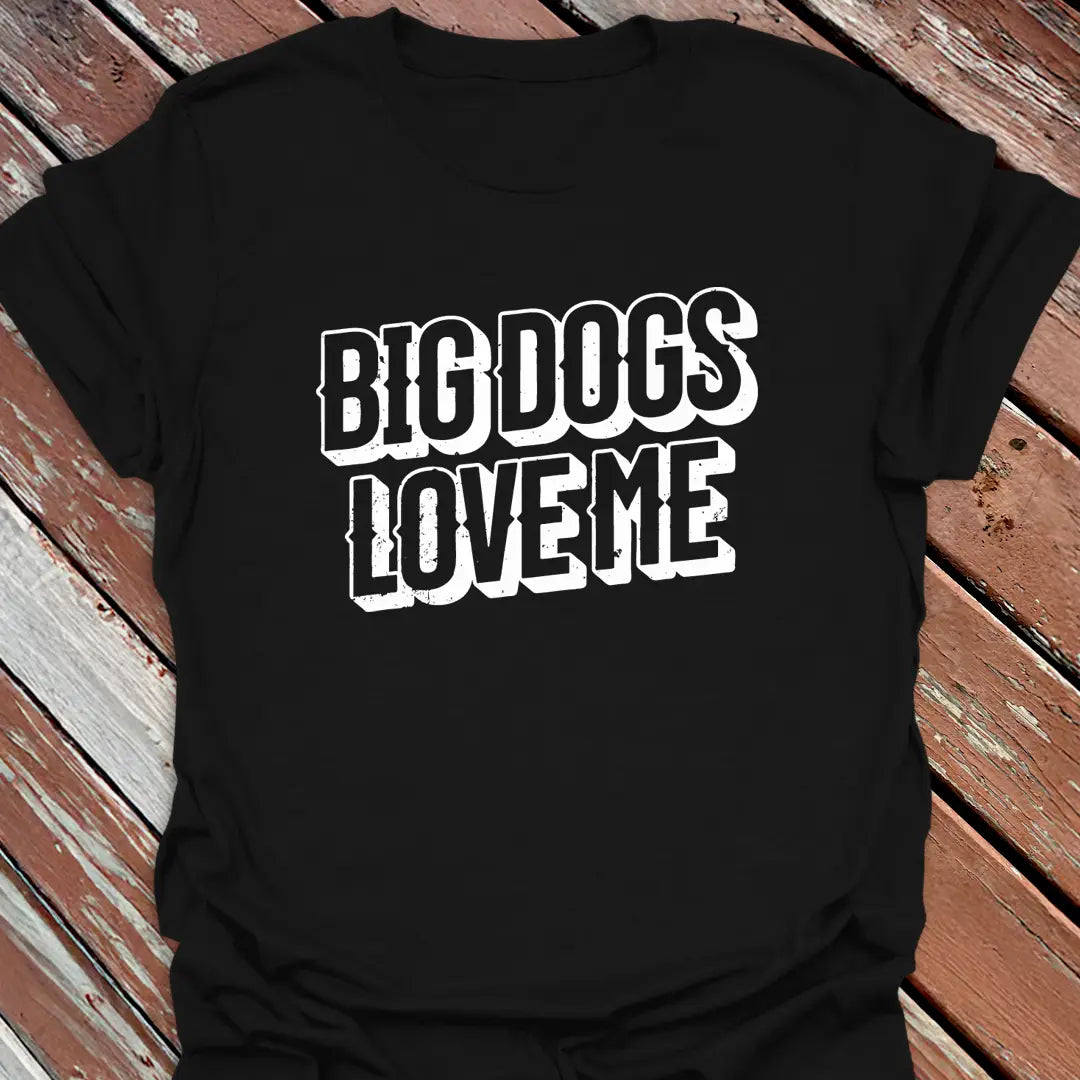
Big dog owners recognize each other across a parking lot, usually before the dogs have said hello. Big Woofer Wear tees are Gildan Softstyle, sizes S through 3XL, printed in the USA. Three or more ship free, and there is a 30 Day Guarantee if the fit is wrong.
Browse the tees, or send sizing and order questions to support@bigwooferwear.com or the order questions page.