


Dog Enrichment Activities for Large Dogs That Actually Work at Home
Your dog just ate a puzzle toy. Not the treats inside it. The toy. Then they stood there with plastic confetti in their beard, tail swinging like a windshield wiper, ready for round two.
That is the problem with enrichment advice written for a twelve pound dog. Everything you buy has to survive a jaw the size of a dinner plate, and every game you invent gets played at full body scale.
What Makes Enrichment Different for Big Dogs?
Size changes almost every part of the plan. A giant dog reaches higher, pushes harder, covers more ground per stride, and loses interest fast when a game ends in four seconds.
Enrichment means giving your dog safe ways to use their brain and body. The usual buckets are environmental, sensory, social, and cognitive. Big dogs need all four, scaled up. A hallway that works as a search area for a small dog is barely a corridor for a Newfoundland's shoulder.
Then there is reach. Anything hidden at small dog height is already gone. Your dog found it from the doorway.
Match the Activity to Your Dog's Size, Strength, and Play Style
Pick activities your dog can win at without breaking something, which means checking the space, the gear, and the surface underfoot before you start.
Strength matters most with anything plastic or stuffed. Choose a toy sized so it cannot be swallowed and made of something that will not crack into pieces. For a powerful chewer, that usually means solid rubber or thick nylon rather than hollow plastic.
Play style counts too, and it is worth watching your own dog rather than assuming from the breed. Some dogs want to carry things. Some want a task with steps in it. Some want to lie down and consider the problem for a while first, and will do that regardless of what the breed description says.
Balance Mental, Physical, Sensory, and Social Needs
Aim for a little of each most days. A simple mix looks like this:
- Mental: one food puzzle or a short scent game
- Physical: a walk plus a few minutes of controlled play
- Sensory: new smells, new surfaces, new sounds
- Social: time with you, or a calm friend dog
How much of each any dog needs varies a great deal, and a dog who is still restless after a session is telling you something useful about the balance.
Start Easy and Rotate Activities Often
Start with a version your dog solves in under a minute. Confidence first, difficulty later.
Difficulty scales with the number of steps involved. One licking task is easy. Pawing, then flipping, then licking is hard. Move up only after your dog has nailed the easy version a couple of times.
Rotation keeps novelty alive. Put three items away for a week,k and they come back interesting.
Indoor Dog Enrichment Activities for Large Dogs
Indoor enrichment works well for big dogs when you swap running for sniffing and problem solving.
Clear the floor first. Giant paws and hardwood do not mix at speed, so put a rug or an old yoga mat wherever the game happens. Anything glass or wobbly goes higher than you think it needs to.
Set Up Snuffle Mats and Scent Games for Big Noses
Snuffle mats are the easiest starting point for scent work. They are fleece pads with dense strands where you hide kibble, so your dog stays in one place while the nose does the work.
Buy the biggest mat you can find, or make one by knotting fleece strips through a rubber sink mat. Large dogs flatten a small mat and then flip it over out of frustration.
For scent trails, drop kibble every few feet down a hallway and hide a jackpot behind a door. Sniffing gives a dog something absorbing to do, and for a lot of wound up dogs it settles them more effectively than more walking does.
Use Food Puzzles That Can Handle Powerful Paws
Food puzzles and treat dispensing toys are where cheap gear dies. Look for solid rubber, thick walls, and no snap on lids a determined dog can pry off.
A stuffed rubber toy is the classic. Smear something sticky inside, add kibble, then freeze it. Frozen makes it last considerably longer than the same toy served at room temperature, and lick mats work on the same principle for dogs who need help settling.
Supervise every new puzzle. If your dog chews pieces off it, that item is retired permanently rather than watched more carefully. Multi dog homes need baby gates as well, because food puzzles can bring out guarding in dogs who have never guarded a bowl.
Turn Towels and Muffin Tins Into Quick Brain Games
Free beats fancy most days. Roll treats inside a beach towel, twist the ends, and let your dog unroll it. Use a beach towel rather than a hand towel, since a Rottweiler nose needs something with heft.
The muffin tin puzzle is the other household option, with two conditions attached. Use a metal pan rather than silicone, and use balls too large for your particular dog to get into their mouth, which for a giant breed rules out a standard tennis ball. Stay in the room for the whole game so the tin does not become the snack.
If your dog treats every household object as something to destroy, skip the improvised puzzles entirely and stick with scent games. A handful of kibble scattered in grass does the same work with nothing to swallow.
Build Focus Through Trick Training and Obedience Practice
Tricks are enrichment with manners built in. A few minutes of training asks a lot of a big brain, and it teaches the body awareness that giant dogs often lack.
Good tricks for large frames stay low and slow: chin rest, back up two steps, paw target, place, and settle on a mat. Skip jumping tricks and high spins with growing puppies and heavy adults.
Obedience doubles as safety. A solid "leave it" saves a countertop, and a reliable "wait" keeps a hundred and ten pounds inside the car until you say otherwise.
Outdoor Adventures That Give Big Paws Room to Move
Outside is where big dogs get to stretch a full stride. The goal is quality movement rather than distance for its own sake.
Heat, footing, and hard turns are worth watching. Large and giant breeds carry more weight per joint, and softer, more forgiving ground is generally easier on a heavy dog than repeated work on concrete.
Make Walks More Interesting With a Sniffari
A sniffari is a walk where your dog picks the route and the pace. You hold the leash and go where the nose goes.
A longer leash helps, and so does a harness, partly so a sudden lunge toward a good smell does not wrench a neck and partly for your own shoulders.
For a dog who comes home from exercise still wired, a slow sniffing walk is often more useful than a brisk one. Not always, and not for every dog, but it is the first thing worth trying.
Play Fetch, Tug, and Chase With Joint Friendly Boundaries
Fetch works for big dogs with two rules: roll the ball along the ground instead of launching it, and stop before your dog gets sloppy. Leaping catches and skidding stops put real strain on a heavy frame.
Tug is safer than its reputation when you keep it low, let your dog do the pulling while you hold steady, and teach a clean release you can trade for.
Flirt poles and herding balls suit dogs who like to chase. Keep flirt pole sessions short with wide arcs rather than sharp turns, and choose a herding ball built for a strong pusher. Puppies and seniors need shorter turns than adults.
Build Simple Coordination Work in a Safe Open Space
Coordination work needs almost no gear. Cones to weave through, a plank flat on the ground for balance, poles laid on the ground to step over, and objects to walk around will cover it.
Keep it low. Ground poles and stepping around obstacles give a big dog something to think about without asking a heavy body to launch and land. Choose grass, and skip it on wet or frozen footing.
If your dog takes to it, organized dog sports open up. Flyball, dock diving, and disc dog all run classes that welcome large breeds, and a class with an instructor watching your particular dog is a better guide to what suits them than any article.
Choose Social Outings That Suit Your Dog
Match the outing to your dog's temperament rather than to what is on the calendar. Some big dogs thrive at dog parks. Plenty do far better on a private rented field with one familiar friend.
Options worth trying include daycare with size grouped play, a private yard rental, or dog friendly beaches during quiet hours. If your dog is getting overwhelmed, leave early. That is a good decision, not a failed outing.
How to Build a Safe, Realistic Enrichment Routine
The routine that works is the one you can repeat on a bad week. A short session done daily beats an elaborate plan abandoned by Thursday.
Anchor enrichment to something you already do. Meals, the morning walk, the stretch before bed. Once it rides along with an existing habit, it stops feeling like homework.
Use Meals as Part of Your Daily Enrichment Plan
Feed dinner through a puzzle instead of a bowl. Your dog gets a stretch of work out of food they were going to eat anyway, and there is no calorie arithmetic involved.
Rotate the delivery method through the week: snuffle mat one day, rolled towel the next, food puzzle after that. Wash everything after use, since food left sitting in a toy spoils.
Offer puzzles when your dog is a little hungry, just before a scheduled meal. Interest tends to run highest then.
Choose Low Equipment Activities for Busy Days
Some days you have five minutes and nothing clean. These still count:
- Scatter kibble across the lawn and let your dog hunt it
- Hide three treats around one room while your dog waits
- Practice "find it" with a favorite toy
- Take one slow sniffing lap around the block
- Run two minutes of trick training on a mat
Pick one. It is not a full day of enrichment for every dog, but it keeps the habit alive, and the habit is the part that is hard to rebuild once it lapses.
Watch for Frustration, Wear, and Overstimulation
Stop the game before your dog unravels. Barking at a puzzle, shoving it hard, or walking away usually means the difficulty jumped too far, so drop back a level.
Check gear weekly for cracks, tooth marks, and loose parts. If your dog suddenly stops using a favorite puzzle, or seems reluctant after picking it up, dental or neck pain can be the reason, and it is worth a veterinary visit.
Overstimulation looks like a dog who cannot settle after play. A quiet chew afterward, with you in the room, helps bring the arousal back down.
Adjust for Puppies, Seniors, and Dogs With Limited Mobility
Large breed puppies need mental work more than hard physical exercise. Growth plates stay open longer in big dogs, and guidance on how much exercise a puppy needs is worth reading before adding repetitive impact or long runs to a young dog's week. Caring for a giant breed has its own considerations on top of that.
Seniors keep sharper minds with regular puzzle solving. Bring the games down to floor level, use a non slip mat, and shorten each session while keeping the frequency the same.
For dogs with limited mobility, choose games that happen lying down. Lick mats, a snuffle mat placed under the chin, scent boxes within easy reach. Nose work needs almost no movement at all.
Frequently Asked Questions
How Do I Mentally Stimulate a Large Dog at Home?
Feed one meal a day through a food puzzle or a snuffle mat, then add a few minutes of trick training. That combination gives most large dogs real mental work without needing more floor space than a rug.
What Are Free Dog Enrichment Activities for Large Dogs?
Rolled beach towels with treats inside, kibble scattered on the lawn, hide and seek with a toy, and a slow sniffing walk all cost nothing. A metal muffin tin can work as a puzzle too, provided the balls covering the wells are too large for your dog to get into their mouth, and you stay in the room.
How Long Should Enrichment Activities Last for a Big Dog?
It depends entirely on the dog. The more useful rule is to end while your dog is still interested rather than to run a set number of minutes, since stopping on a win keeps them keen for the next round.
Are Snuffle Mats Safe for Large Dogs?
With supervision and a mat sized for a big nose, yes. Watch for chewing on the fleece strands and retire any mat with loose or shredded pieces your dog could swallow. Fleece is not a chew toy, and a determined dog will find that out before you do.
How Can I Keep My Big Dog Entertained While I Am at Work?
Give a real sniffing walk before you leave, since a dog who has used their nose tends to settle better alone. For what to leave behind, choose something built to be chewed and too large to swallow rather than fabric or destructible enrichment. Snuffle mats, lick mats, and stuffed puzzles are supervised activities, so save those for when you are in the room.
What Should I Do if My Dog Destroys Puzzle Toys?
Retire that toy and switch to solid rubber or thick nylon with no removable parts. Supervise the first several sessions with anything new, and skip hollow plastic entirely for a powerful chewer.
A Happier Big Dog Starts With One Good Game
Enrichment for a big dog comes down to three habits: feed some meals through a puzzle, add sniffing to walks, and keep sessions short enough to end well. Choose gear built for real strength, clear the floor before indoor games, and go easy on a heavy frame outdoors.
Your dog does not need a shelf full of equipment. A towel, a longer leash, and a handful of focused minutes cover most days. Rotate the ideas so old games feel new again, and let your dog tell you what they love by how hard they work at it.
Made for Big Dog Households
Big dog people trade these ideas the way other people trade recipes, usually with a giant head resting on somebody's knee throughout.
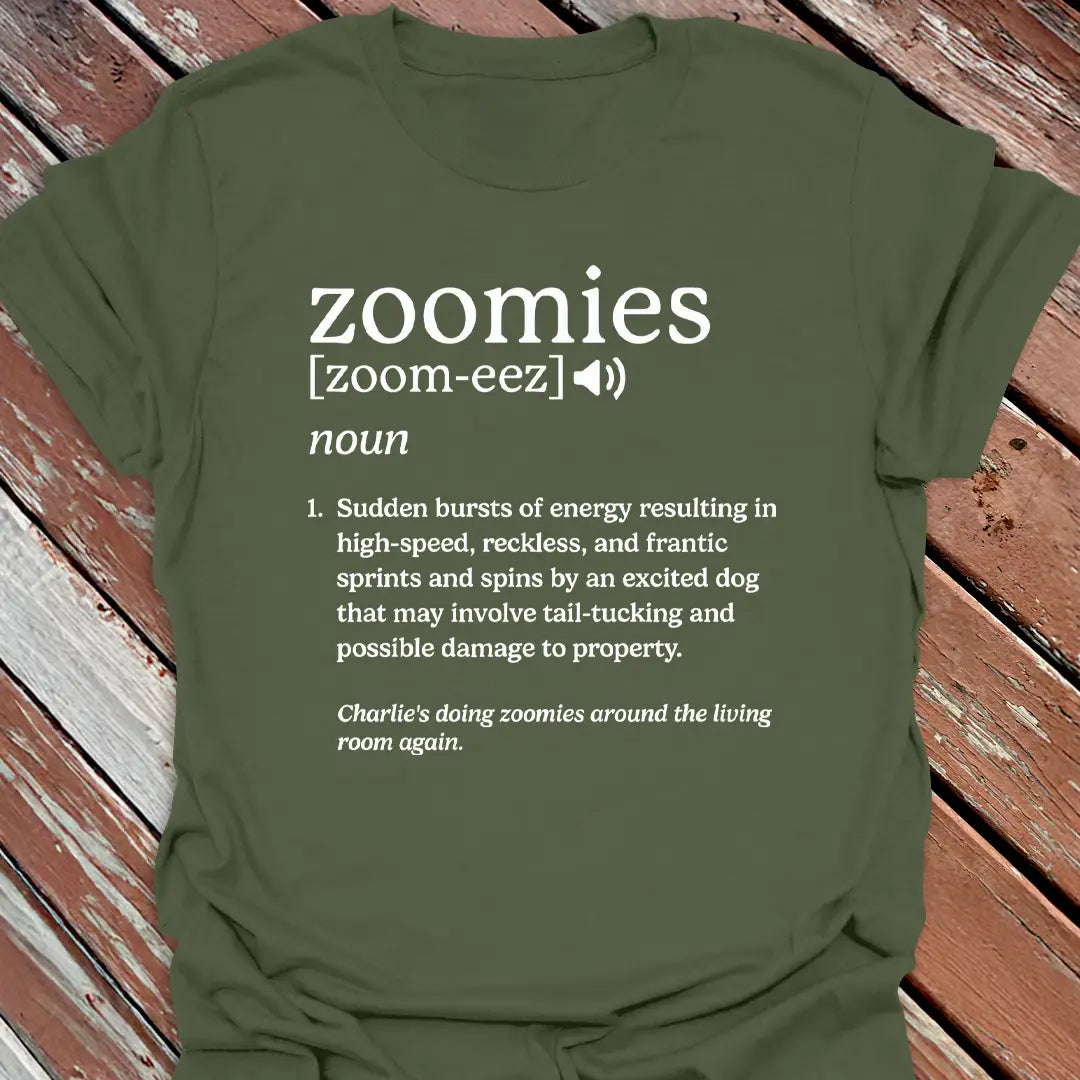
If that is your house, Big Woofer Wear has the tee for it. Gildan Softstyle in sizes S through 3XL, printed in the USA, free shipping on three or more, and a 30 Day Guarantee if the fit misses. Find your tee, or reach support with sizing questions, or email support@bigwooferwear.com.