


Giant Breed Dog Comparison: Which Couch Giant Fits Your Life?
You are standing in the kitchen at six in the morning, and a head the size of a bowling ball comes to rest on the counter beside your coffee. Nobody jumped. Nobody climbed. The dog stood up.
That is the actual decision in front of anyone comparing giant breeds. Not which one is biggest. How much of your house, your car, and your personal space you are prepared to hand over. What follows is an honest look at three unmistakable giants: the Great Dane, the Mastiff, and the Newfoundland.
What Makes a Dog a Giant Breed?
There is no single agreed cutoff. Different registries, veterinary sources, and breed standards draw the line in different places, and a dog can sit in the giant category by one definition and the large category by another. Weight somewhere above a hundred pounds is a common rough marker rather than a rule.
The label matters less than what it implies about care. Guidance on caring for giant breeds is worth reading, whatever the label says, because the practical considerations arrive with the body rather than with the classification.
Why Height, Weight, and Build All Matter
Weight on its own will mislead you. A Scottish Deerhound and a Mastiff can land at similar numbers and occupy completely different amounts of room.
Height decides what your dog can reach. Width decides whether two people can pass in a hallway. Density decides how many people it takes to lift a dog into a car at the vet, which is not a hypothetical question over a fifteen-year period.
Three Very Different Kinds of Giant Dog Life
Giant dogs sort loosely into three shapes. Tall and leggy sighthound types. Heavy mastiff types built low and wide. Coated working giants bred for cold weather and pulling.
Picking a shape that does not suit your home means years of working against the dog's design rather than with it. That is the comparison worth making, and it is why the three below are useful to look at side by side.
Giant Breed Dog Comparison at a Glance
Great Dane: Tall, and Usually Very Interested in You
Danes are the tallest of the three, tall enough that a Dane's head sits at counter height and a paw can arrive at chest level without any effort involved.
Many Danes are highly social and want to be wherever their people are, though that is a common tendency rather than a promise about any individual dog. A Dane on the sofa is generally a Dane on all of the sofa.
Growth is worth planning for. Large and giant breed puppies grow for longer than small dogs do, and diet and exercise during that stretch are worth discussing with your veterinarian rather than improvising.
Mastiff: Dense, Often Quiet, and Powered by Leaning
Mastiffs are the heavy option, with a low center of gravity that turns leaning into a full body event.
The lean is what Mastiff owners describe most. The dog arrives, turns sideways, and transfers weight into your legs. If you do not brace, you sit down whether that was the plan or not.
Many Mastiffs are notably calm indoors. Many are not, particularly when young, and adolescence in a dog this size is its own project.
Newfoundland: Coated, Water Inclined, and Usually Underfoot
Newfoundlands were bred to work in cold water, and a great many of them retain a strong interest in it. Give one access to a lake, a kiddie pool, or a puddle, and you will usually find out quickly.
The double coat comes with a workload attached. Newfoundlands shed and blow coat seasonally, which turns brushing from a chore into a scheduled commitment.
How Daily Life Changes With Each Giant Breed
Energy Needs and Exercise Expectations
None of these three is a stamina breed in the way a Belgian Malinois or an Alaskan Malamute is, which surprises people who assume big means high energy.
Broadly, Danes tend toward short bursts followed by a long collapse, Mastiffs toward steady walking over sprinting, and Newfoundlands toward swimming and cool weather work. Individual dogs land all over these ranges, and a young dog of any of the three will want more than an older one.
Heat deserves a mention for the coated breeds. A Newfoundland on hot pavement is carrying a winter coat into a summer problem.
Indoor Space, Couch Takeovers, and Doorway Traffic
All three block doorways. It is not defiance. It is a large animal wanting to be near you, occupying the only route between two rooms.
Danes sprawl long. Mastiffs settle wide and low, usually in the main walkway. Newfoundlands find the coolest tile in the house and become part of the floor plan until dinner.
Grooming, Shedding, and Drool
Grooming has a clear order here. The Newfoundland's double coat needs the most work by a comfortable margin, several sessions a week plus heavier seasonal periods. Mastiffs and Danes both have short coats that need far less.
Drool runs the other way, and it is worth being honest that the ranking depends on the individual dog and the shape of its jowls rather than being a fixed breed property. Mastiff owners talk about drool constantly and keep towels in multiple rooms. Newfoundland owners do too. Dane owners generally report less of it, though a Dane after a long drink is nobody's tidy dog.
Training Manners for a Dog With Big Paws
Teach the physical skills before the dog outgrows you, which happens faster than new owners expect. Four carry the most weight:
- Loose leash walking, taught at forty pounds rather than a hundred and forty
- Four paws on the floor for greetings
- A reliable place cue so the dog settles off the walkway
- Calm handling for nails, ears, and veterinary exams
Reward based training and consistency do the work in all three breeds. Size raises the cost of getting it wrong; it does not change the method.
Affection Styles and Public Attention
The three are often described as loving differently, and there is something to it, though it describes tendencies rather than rules. Danes are the ones people describe climbing into laps. Mastiffs lean. Newfoundlands plant against your shins and sigh. Any given dog may do all three or none.
All three attract strangers everywhere. You will answer the same questions at every gas station: how much does it eat, how much does it weigh, and can I pet it?
The Practical Side of Sharing a Home With a Giant Dog
Giant dogs cost more across nearly every category, because so much of the cost is dosed or sized by the dog.
Food, Equipment, and Routine Costs
Flea and tick preventives, heartworm medication, and anesthesia are all priced or dosed by body weight. So are beds, crates, and harnesses.
Boarding and grooming often cost more for a very large dog, though how much more varies by provider and by region, so the number to plan against is the one your local providers quote rather than a rule of thumb. Ask before the puppy comes home rather than after.
Cars, Beds, Crates, and Home Setup
Measure your vehicle first, and measure it against an adult dog rather than the puppy in front of you. A ramp is worth having before you need it, because lifting a sick giant is not a one person job.
Crate sizing runs to the largest categories available, and the right size depends on the individual dog's adult measurements rather than a single number. Beds need real support. Baby gates work for some dogs and are a suggestion to others, which is worth knowing before you rely on one.
Bloat Awareness and Health Planning
Some deep chested breeds, including several of the giants, carry an elevated risk of bloat, which is a life threatening emergency. Learn the signs before you need them: a swollen or distended abdomen, unproductive retching, restlessness, and pale gums. This is an immediate veterinary visit, not a wait and see.
Preventive gastropexy is a procedure some owners of at risk breeds discuss with their veterinarian. Whether it is appropriate depends on the individual dog, and it is a conversation to have with a vet who knows that dog rather than a default step for every giant breed.
Finding the Right Match for Your Household
Match the dog to your climate and to your patience. A heavily coated breed in a hot southern summer is a different proposition from the same dog further north. A Mastiff needs floor space more than yard space. A Dane wants soft surfaces and company.
Individual dogs vary more than any breed chart admits, which is the single most useful thing to hold onto while comparing.
Frequently Asked Questions
Which Is Bigger, a Great Dane, a Mastiff, or a Newfoundland?
It depends on what you mean by bigger. Mastiffs are generally the heaviest of the three, Great Danes the tallest, and Newfoundlands land between them with by far the most coat. Height and mass give you different answers, and individual dogs within each breed vary considerably.
Are Great Danes, Mastiffs, and Newfoundlands Good With Kids?
All three have reputations as gentle family dogs when they are well socialized and trained from early on. Size alone makes supervision sensible, since a happy tail or a leaning shoulder can knock over a small child without any intent behind it. Individual temperament matters more than the breed label.
Which Giant Dog Breed Needs the Most Grooming?
The Newfoundland, by a clear margin. That double coat needs brushing several times a week and more during seasonal shedding. Mastiffs and Great Danes have short coats and need much less brushing, though Mastiff owners tend to trade brush time for drool towels.
Do Giant Dog Breeds Cost More to Care For?
Yes, and it shows up nearly everywhere. Food, preventive medications, anesthesia, boarding, crates, and orthopedic beds are all priced or dosed by size. Plan on a noticeably higher yearly budget than a mid sized dog, and get quotes locally rather than working from averages.
How Do I Decide Between These Three Giant Breeds?
Decide on the daily workload rather than the puppy photos. Brushing hours, drool management, floor space, and heat tolerance are what you will actually live with. Then meet adult dogs of each breed if you can, because the individual dog in front of you is more informative than any comparison, this one included.
Choose the Giant Dog Life You Can Happily Share
Pick the giant whose daily demands you will still enjoy in year five. Grooming time, drool towels, and floor space are the deciding factors, not how the puppy photographs.
A Great Dane suits a home that wants something tall and social and can offer soft bedding and steady company. A Mastiff suits people who like calm weight and a dog that leans rather than bounces. A Newfoundland belongs with someone who enjoys brushing, cool weather, and a dog who regards every body of water as an invitation.
Those are starting points, not guarantees. Every one of these breeds produces dogs who ignore the description entirely, and you will be living with the dog rather than the breed.
Whichever One Takes Over Your Couch
You end up in the same club regardless.
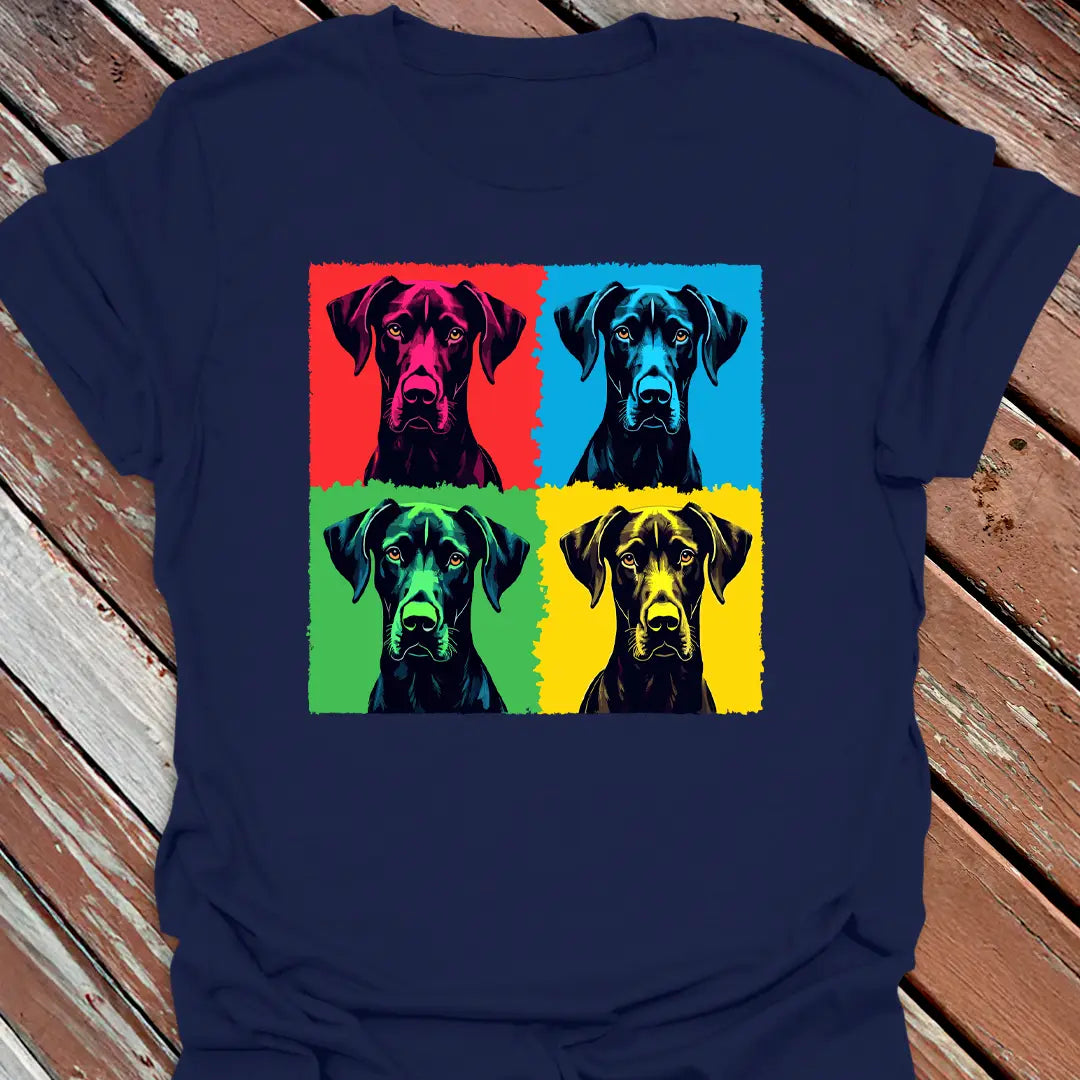
Big Woofer Wear tees are Gildan 64000 Softstyle in sizes S through 3XL, printed in the USA with water based, OEKO TEX certified inks, and backed by a 30 Day Guarantee. Three or more ship free. The big dog tee lineup is here, and you can get in touch about an order or email support@bigwooferwear.com.